Rohingya repatriation talks reach stalemate

DHAKA: Efforts to repatriate almost a million Rohingya refugees to Myanmar have reached a stalemate due to the country’s reluctance to restart talks, according to officials in Bangladesh.
Hundreds of thousands from the Muslim minority group fled a military “clearance operation” in Myanmar’s Rakhine state in 2017, crossing over to Bangladesh in fear of their lives.
Bangladesh has been struggling with the strain the refugees have placed on the economy, with the coronavirus pandemic exacerbating the crisis, but previous attempts to repatriate the Rohingya failed to attract takers.
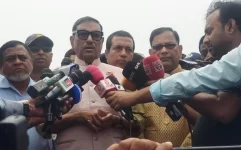
“It seems that Myanmar is not interested in holding talks on repatriation issues,” Delwar Hossain, director general of the Myanmar wing at Bangladesh’s Ministry of Foreign Affairs, told Arab News. “We write to them regularly to resume the talks. Sometimes they reply, sometimes they don’t. It’s becoming difficult to bring them to the discussion table.”
Myanmar said its Rakhine operation was in retaliation to attacks by Rohingya Muslim insurgents.
Its crackdown led to the mass migration of Rohingya, with horrifying tales of torture and persecution emerging in the days that followed which the UN later described as “genocidal intent.”
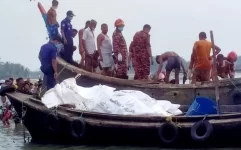
Some walked, while others swam across the Naf river to reach Bangladesh’s Cox’s Bazar District (CBD) — the closest area bordering Rakhine — joining more than 200,000 Rohingya who had fled violence in previous years and were already housed there.
The CBD, known as the world’s largest refugee camp, stretches across 5,800 acres of land and is home to nearly a million Rohingya refugees who are desperately hoping to be resettled elsewhere.
Bangladesh and Myanmar signed a deal in Nov. 2017 for the phased repatriation of all Rohingya back to Rakhine — starting from Jan. 2018 — with the two countries forming a joint working group (JWG) a month later to take the process forward.
The two repatriation attempts, in Nov. 2018 and Aug. 2019, failed after none of the refugees wanted to return to Rakhine, fearing persecution and torture at the hands of the regime.
“Our demands were very specific,” Syed Ullah, former secretary-general of the Arakan Rohingya Society for Peace and Human Rights, told Arab News. “We wanted citizenship rights, freedom of movement, and restatement in our original places. Once these issues are addressed properly, we want to return to our homeland without any delay.”